
GENERATE26 is the second edition of the Playground for Creative Technology, Digital Arts and Electronic Music at the Helmut List Halle in Graz. It features two events in April and May, dedicated to community building, experimental creation and creative exchange, centered around creative technologies, media art and electronic music.
On the WORKSHOP DAY, participants develop their skills in working with GEN AI and generative digital tools.
WORKSHOP TICKETS
Tickets can be purchased online via KUPFticket.
APRIL 11, 2026GENERATE WORKSHOPS
The Art of Leveraging Artificial Intelligence:
Applied Generative AI for professionals
Sandro Asatiani, Karl Stocker
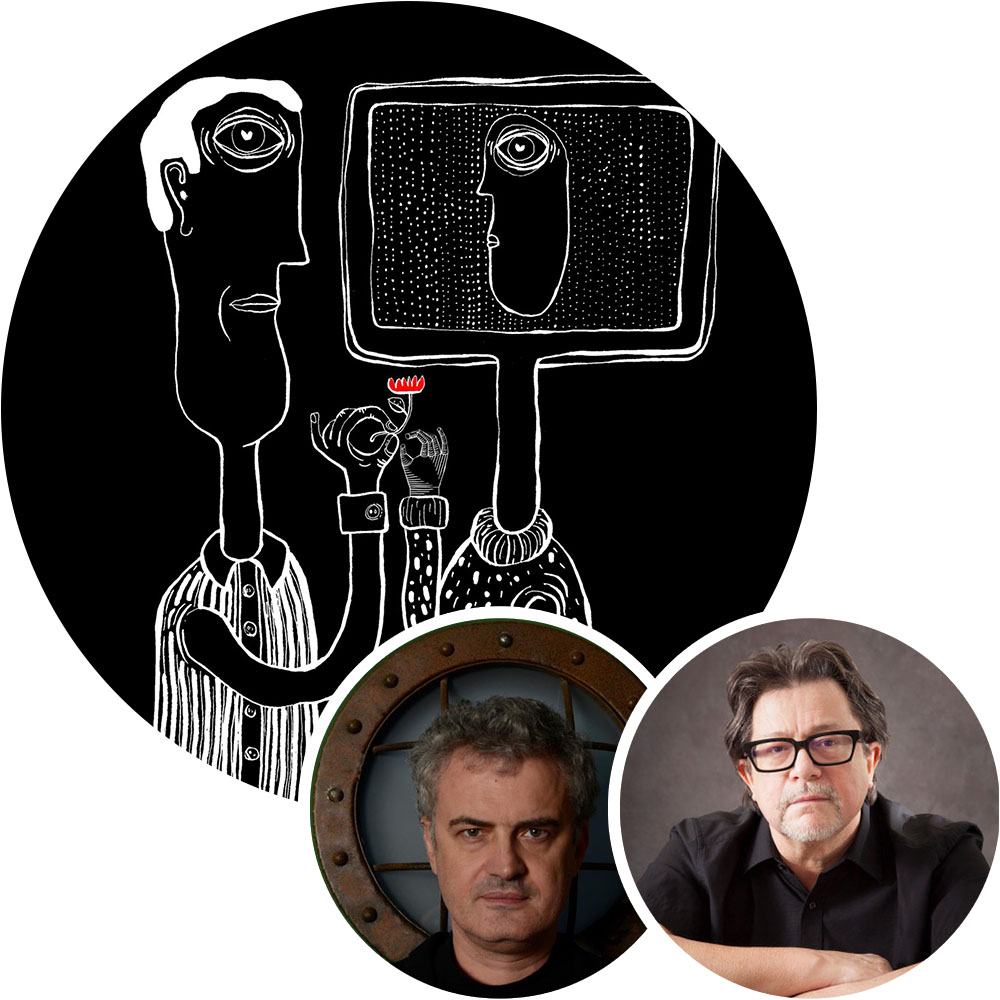
ABSTRACT: This interactive workshop is designed for professionals seeking to transcend the conventional perception of Artificial Intelligence (AI) as a mere conversational interface. Participants will explore AI not only as a source of information but as a strategic partner and a fundamental instrument that empowers individuals to become the architects of their own digital workspaces.
HOST BIO: Sandro Asatiani is a distinguished artist, educator, and technologist, celebrated for his profound integration of creative arts and computer technology. He holds a Master of Arts from the Tbilisi State Academy of Arts, supplemented by painting studies in Florence and Minneapolis, which enriched his diverse artistic perspective. His prolific career includes extensive international exhibitions across major cities like Florence, Paris, and Vienna. His unique professional trajectory blends art and technology, evidenced by his roles as a design group head and ICT engineer. As an Associate Professor at Ilia State University and an Invited Professor at the Tbilisi State Academy of Arts, he has been pivotal in shaping Georgian arts education. He developed and accredited Master´s programs in Media Arts and Media Engineering, continually exploring the dynamic relationship between art, technology, and education.
Karl Stocker is a historian, educator, researcher and consultant in the fields of culture & design, an author/editor of books and scientific contributions. His professional and academic interests include design & theory, design & society, exhibition design and socio & sustainable design. He is also an exhibition director with 30 years of exhibition practice and various numbers of implemented projects. He was head of the Design and Communication Institute at University of Applied Sciences in Graz for many years. He was a professor at Kassel University 1996/97, Visiting Professor at Berlin University of the Arts 2009-2015, and he still is a professor at Graz University (since 1988). Since October 2024, he has been co-head of the English-language PhD program “Media Arts/Digital Media” at the Tbilisi State Academy of Arts in Georgia.
PROMPTOTYPING:
Angewandte Generative KI in den Geisteswissenschaften
Christian Steiner
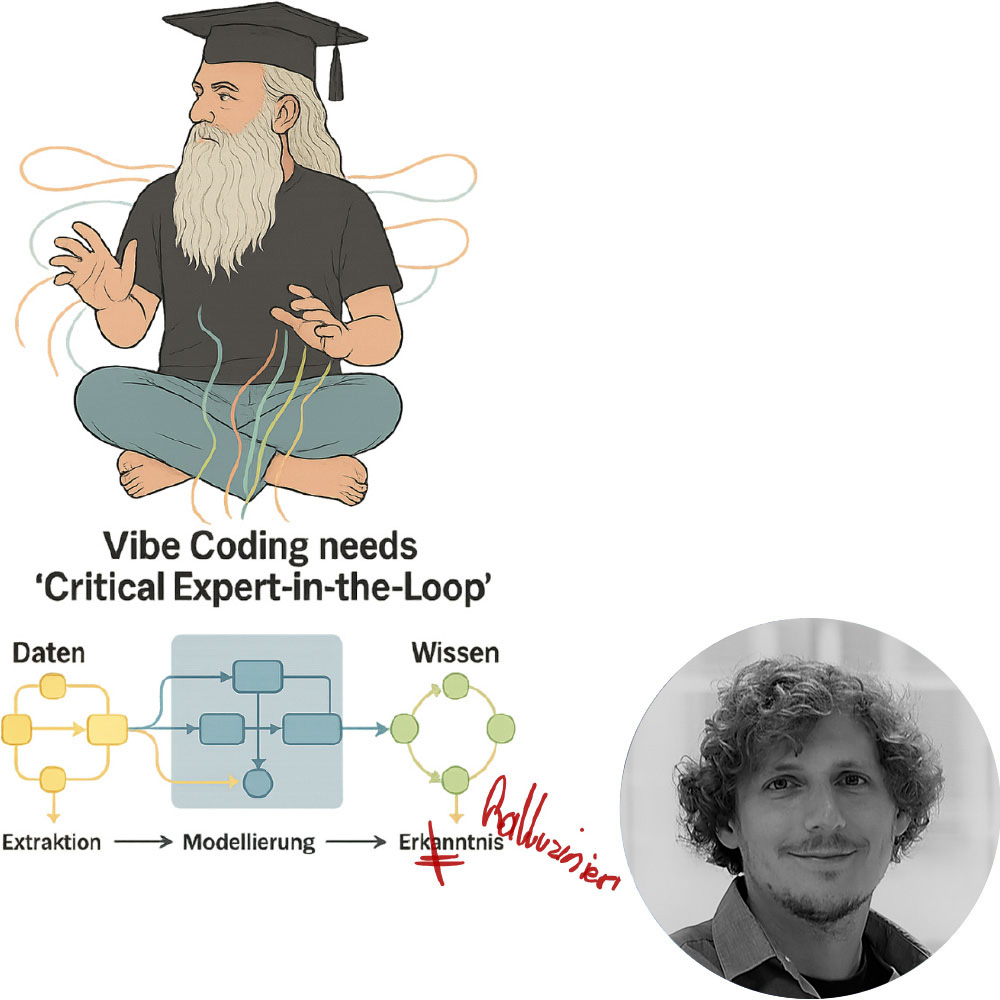
ABSTRACT: Der Workshop führt in Promptotyping ein, eine Context Engineering Methode zur Bearbeitung komplexerer Wissensarbeit mit Frontier-LLMs wie Claude Opus 4.6. Die Teilnehmerinnen lernen, wie Multiagentensysteme funktionieren und wie man sie produktiv einsetzt. Zentral ist dabei die Frage, wie man Wissen so aufbereitet und strukturiert, dass KI-Systeme es effektiv verarbeiten können. Ziel des Workshops ist es, einen konkreten Workflow zu vermitteln. Komplexe Wissensaufgaben lassen sich durch das Zusammenspiel von Multiagentensystemen und einer durchdachten Wissensbasis im Sinne der Co-Intelligence bearbeiten.
HOST BIO: Christian Steiner absolvierte Master-Studien in Übersetzen und Digital Humanities an der Universität Graz, wo er seit 2012 am Institut für Digitale Geisteswissenschaften tätig war. Er ist Gründer und CEO von Digital Humanities Craft OG, einem IT-Research-Unternehmen in enger Kooperation mit der Universität Graz. Er lehrt an mehreren Universitäten in Europa. Sein Schwerpunkt liegt auf generativer KI – insbesondere Coding Agents sowie Prompt und Context Engineering – und Webprogrammierung. Er bringt umfassende Erfahrung in Datenmodellierung und -verarbeitung mit, von Geisteswissenschaften bis Naturwissenschaften.
From Quick Sketch to Custom Operator Family:
Toolbuilding in TouchDesigner
Josef Pelz
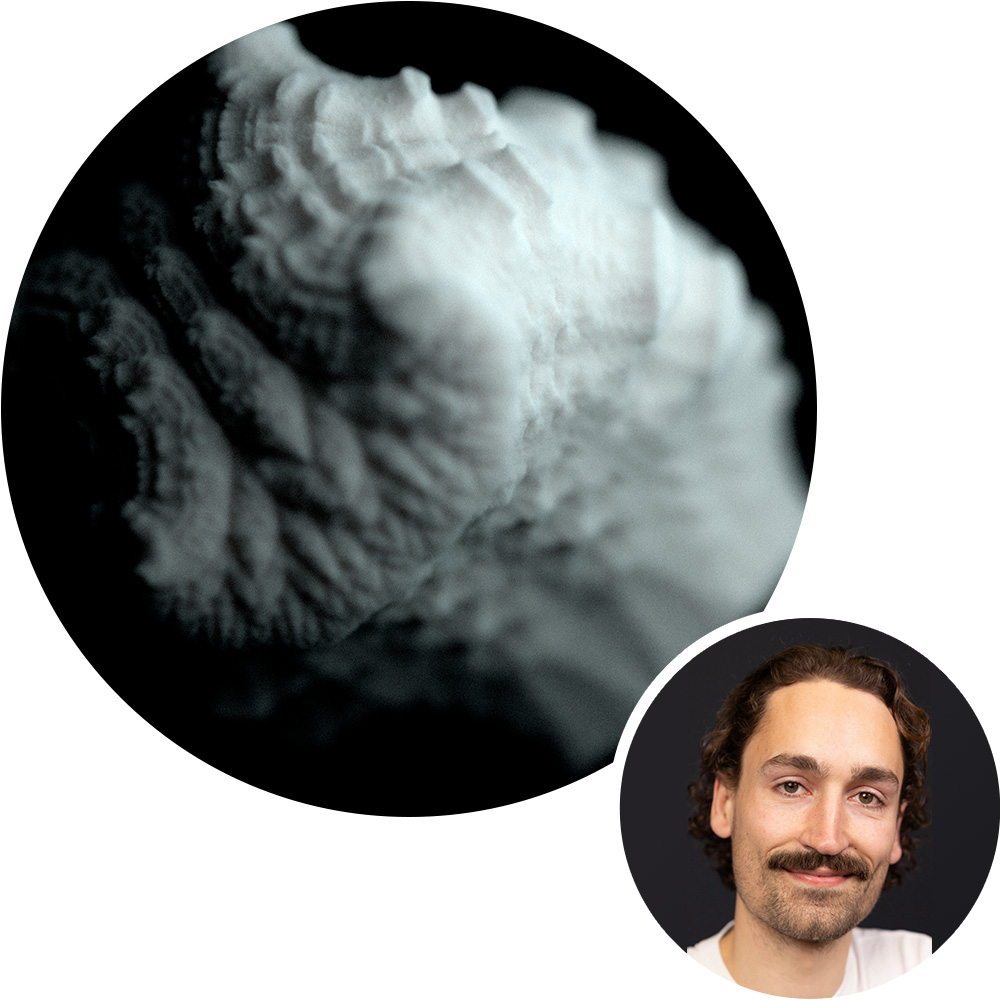
ABSTRACT: 3D textures enable extraordinary creative processes in TouchDesigner. T3D is a toolkit that makes 3D texture workflows easier for everyone. This workshop offers a deep insight into T3D, with concrete application examples. At the same time, it reveals some details from the development process of the Custom Operator Family.
HOST BIO: Josef Pelz is a digital artist and creative coder who explores emergent behaviour in generative systems. Influenced by his background in mathematics and computer science, he develops custom algorithms for dynamic, interactive real-time simulations. Inspired by physics, algorithms and biological processes, he combines analytical thinking with aesthetic research.
GENERATE MAIN on 13 May features a day full of lectures, tech talks and inspiring ideas. Everything comes to a close with the GENERATE NIGHT, which combines electronic music, live visuals and immersive video installations. These events will bring together professionals and enthusiasts from various fields to collaborate, learn and inspire each other.
May 13, 2026GENERATE AI LECTURES
Admission on May 13 is free of charge! The number of seats is limited and will be issued on a first-come, first-served basis.
Doors Open
Reception opening at Halle Detroit
The reception is open from 12:00 to 17:00 and serves as a contact point for visitors and participants.
Beyond the « Totality of Crap Online »:
On Meaningfully Weird AI Images
Klaus Speidel
ABSTRACT: Hito Steyerl once said that the reference field of AI images is not the real world, but “the totality of crap online.” This points to the degraded cultural material that feeds contemporary AI systems. At the same time, it suggests that there is no connection between online and offline realities — which, until fairly recently, was not the case. But not all crap is created equal (and I don’t mean @beeple_crap). When processed, some of it reveals something about the real world it came from. This talk investigates how the scraped disorder of the online archive reappears in generative images — not only as bias, cliché or glitch, but also as a strange visual remainder that warrants more than ❤️, LOLs or 😱. Focusing on meaningfully weird AI images, I argue that certain distortions are not just failures or curiosities. Some images that hover between legibility and breakdown, reveal something about the relation between archive, generation, and human sense-making. To make them speak, we need to combine the age-old art of interpretation with technical understanding. How we read AI images, then, reveals as much about us — our preconceptions and what we expect from things — as it does about AI itself.
BIO: Klaus Speidel is an award-winning philosopher, curator and art critic. After studying philosophy and art history in Munich (LMU) and Paris (École normale supérieure, Paris X Nanterre), he obtained his PhD in philosophy from Paris IV Sorbonne and completed a postdoc at the Lab for Cognitive Research in Art History (CReA) at the University of Vienna. His research is focused on visual storytelling and artful methods in innovation and communications as well as the relationships between generative AI and art. He regularly leads workshops and teaches at the University of Applied Arts in Vienna and ICN Business School (Paris/Berlin).
Can AI Make Art? Folk Intuitions on Creativity, Artistic Intentions and Authorship
Markus Kneer
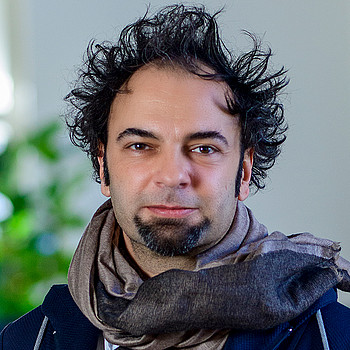
ABSTRACT: This talk presents recent findings in experimental philosophy concerning folk conceptions of AI art and artistic agency. It will touch on a range of questions, including (i) whether people consider AI artefacts art, (ii) whether AI can be conferred artistic status, and (iii) whether AI art is judged as aesthetically valuable as human art. The talk will also explore folk intuitions concerning artistic authorship and credit in artistic human-AI collaboration, and extend the debate to other related fields such as humour and moral advice.
BIO: Markus Kneer studied philosophy and cognitive science at Oxford, Princeton and the Ecole Normale Supérieure Paris and is Professor of Ethics of Artificial Intelligence. His research deals with fundamental questions of human-machine interaction, responsibility in dealing with artificial intelligence, algorithmic bias and propositional norms for LLMs and uses both theoretical and empirical methods.
Ethnography of a Data-making practice
Artemi-Maria Gioti
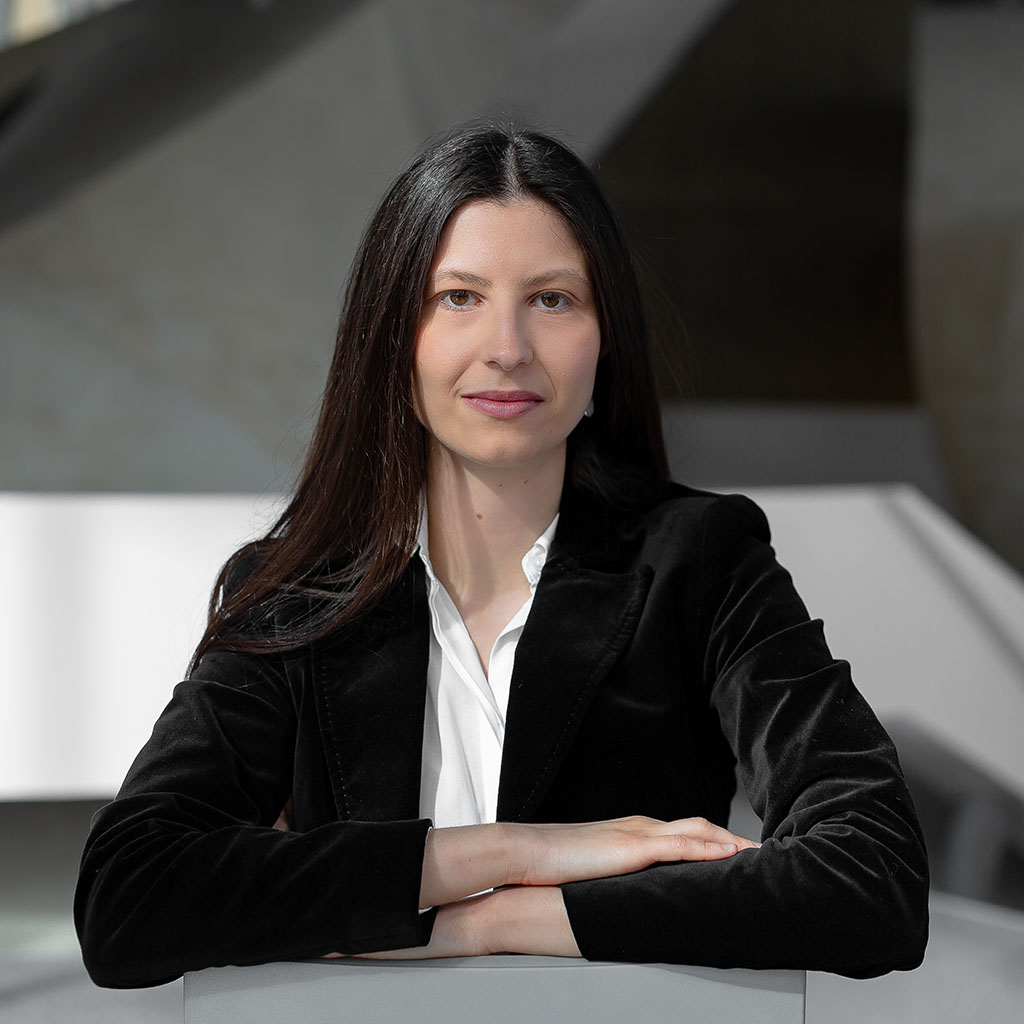
ABSTRACT: In this talk, I will draw on autoethnographic accounts of my compositional practice to examine the insights that artistic research in composition can provide into machine learning and data practices. I will focus specifically on the critical perspectives emerging through the creation of datasets, the training of machine learning models and their deployment in live performance settings. Engaging with theoretical frameworks from critical data studies, I will propose a deconstructive critique of data as material, processual, and relational and foreground the aesthetic decisions embedded in data-making processes.
BIO: Artemi-Maria Gioti is a composer and artistic researcher conducting critical research at the intersection of music and artificial intelligence (AI). She is Professor of Artistic Research in Music at Mozarteum University Salzburg.
Inside the Black Box: How AI really works
Fatima Jammoul

ABSTRACT: Artificial intelligence often appears as a mysterious black box that produces images, music, and text out of thin air with seemingly strong creative abilities and a mind of its own. The adaptive power of these systems has changed how people view work, art and personal connections, prompting a growing number of studies highlighting the risks that arise as these boundaries become blurred. At its core, however, AI isn't driven by magic or mystery, but rather by algorithms and math that can and should be made visible to everyone. In this talk, we dive into the core concepts of AI to demystify these increasingly ubiquitous tools for everyday users without a technical background. Only when we take a look inside the black box and understand these tools for what they truly are, we are empowered to question their outputs, understand their limits, and use them on our own terms.
BIO: Fatima Jammoul is a lecturer and researcher in statistics and machine learning. She holds a PhD in Statistics from the Graz University of Technology and has spent her academic career investigating applications of functional data in various cases, from studying the human influence on local pollution to detecting anomalies in steel production. As one of the core researchers at the Josef Ressel Centre for Time-Series Failure Prediction and Prevention at FH JOANNEUM, she has been working with complex industrial data settings to identify and predict production failures, combining a creative array of techniques ranging from classical statistical modelling to modern machine-learning and deep-learning techniques. Her current research focuses on modelling methods for high-dimensional and functional data in real-world applications.
Session Lead/Moderation
Birgit Bachler
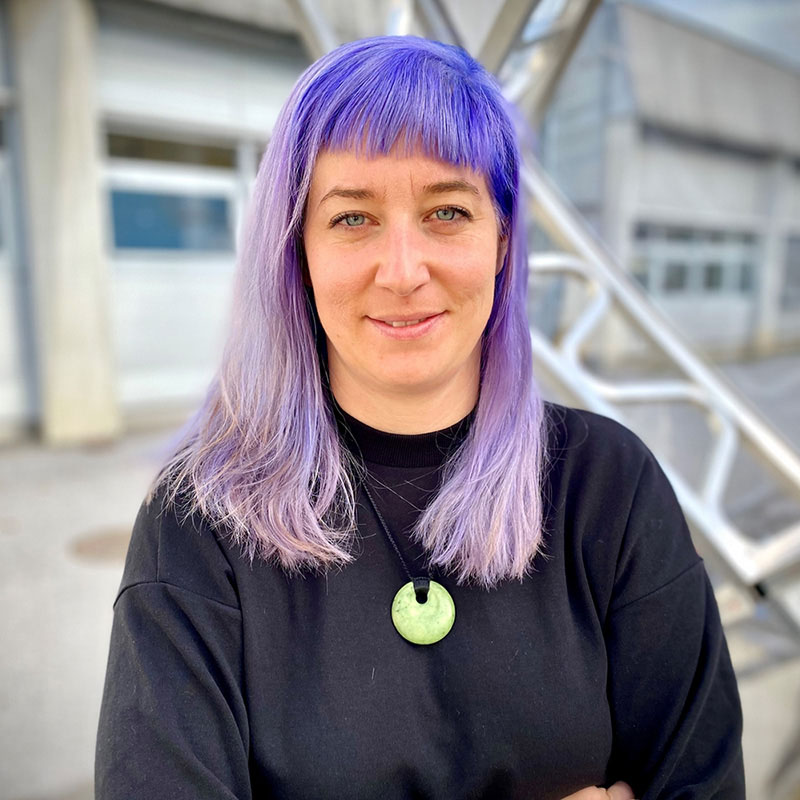
Birgit Bachler is an Austrian artist, designer and researcher previously based in Rotterdam/NL and Wellington/The Whanganui-a-Tara/NZ recently settled again back home in Styria. Birgit has a background in interactive, audiovisual art, critical media design and hard- and software art. Curious how contemporary technology manipulates human and non-human connections she crafts experimental networks, often combining new and obsolete media with custom-built hardware and software. By dismantling and manipulating code and mechanisms of seemingly social technologies, she designs critical, sometimes playful contemplations of new media. In her most recent research she investigates Internet of Things and radio technologies as a means to give voice to the more-than-human world in networked environments.
Birgit has exhibited and presented at art institutions such as V2_ Institute for the Unstable Media (Rotterdam, NL), The Netherlands Media Art Institute (Amsterdam, NL), Museumsquartier (Vienna, AT) and media arts festivals such as Transmediale (Berlin, GER), xCoAx (Graz/online), ISEA (Istanbul, TR & Manizales, CO), Piksel Festival (Bergen, NO) and Sonic Acts Academy (Amsterdam, NL).
May 13, 2026CREATIVE EVENING
Immersion Machines: A Critical History of Spectacle, Space and Media
Zalán Szakács
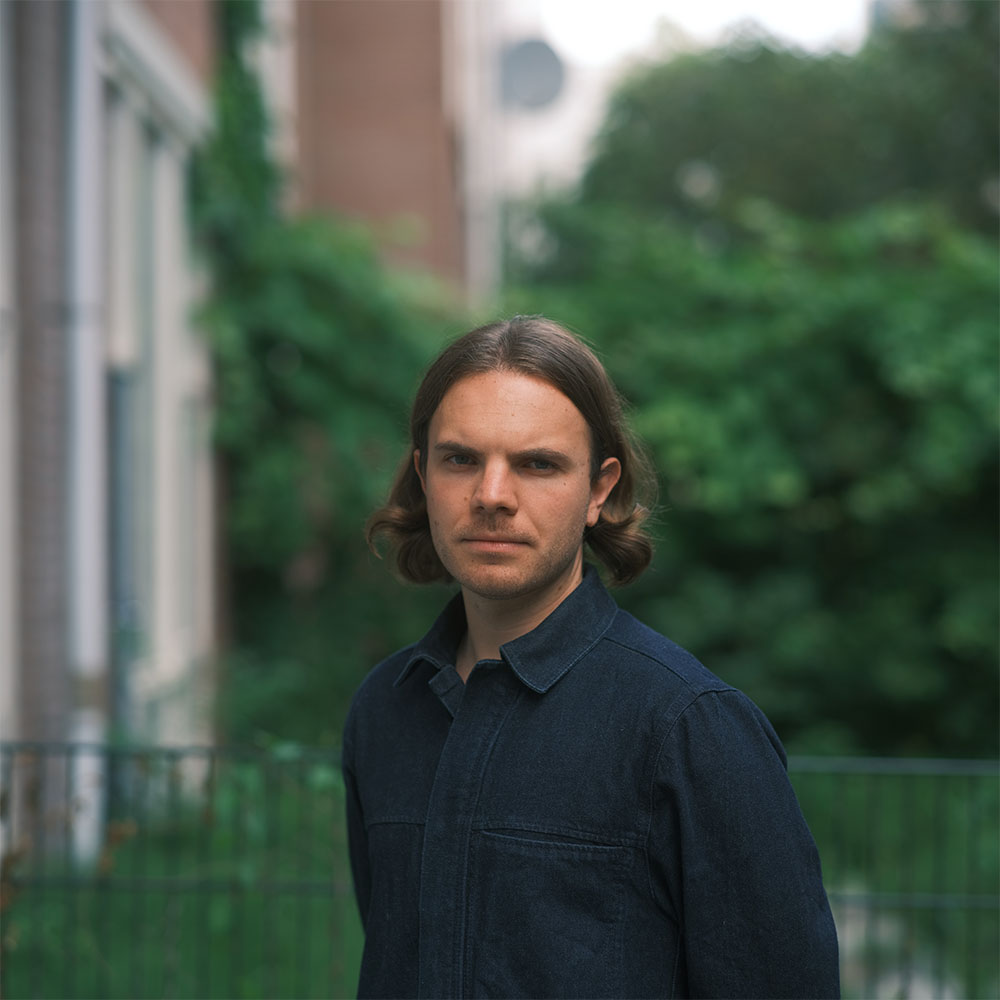
ABSTRACT: What does it really mean to be immersed? This talk takes a critical look at immersive art by tracing its history from the spectacular environments of Ancient Rome to contemporary media art installations. Through a series of historical examples and comparisons with current installation art practices, the lecture explores how artists have long used space, technology, and perception to envelop audiences. By reflecting on both past and present, the talk questions the promises and limits of immersion today. The presentation also includes selected works by the Rotterdam based installation artist Zalán Szakács, offering insight into contemporary artistic approaches to immersive experience.
BIO: Zalán Szakács is active in the fields of immersive art, scenography and media theory research. In his work, Szakács explores the relationship between space, body and technology, resulting in multisensory experiences that incorporate elements such as light, sound, smell, tactility and movement. Szakács' art installations invite the viewer on a mystical journey where reality and fiction merge. In tune with individual and collective experience, it awakens a deeper awareness of the body in space and is capable of transporting the viewer to another place and time.
He has performed at the CTM Festival (Germany), MUTEK MX (MX), Ars Electronica Festival (AUT), the International Film Festival Rotterdam (NL), the Stedelijk Museum Amsterdam (NL), Het Nieuwe Instituut (NL), V2_ Lab for the Unstable Media (NL), the Kunsthaus Graz (AUT), MU Hybrid Art House (NL), Instrument Inventors Initiative (NL), TENT Rotterdam (NL), W139 (NL), Netherlands Film Festival (NL), Recontres Internationales Loods6/Amsterdam (NL), Zsolnay Light Festival (HU) and Light Art Museum Budapest (HU). Szakács is a senior lecturer at Utrecht University of Arts and curator of the Young Masters Exhibition at KLANGLICHT 2026.
heARTmonitor: interactive project presentation
Erwin Hauser
heARTmonitor is a media-based research and design experiment at the interface of technology, music and human physiology. It investigates how music influences our heart rate - and whether these reactions synchronise across multiple listeners. Using a state-of-the-art heart rate bracelet with an optical sensor array that transmits data to a central computer via Bluetooth and ANT+, heart activity is recorded, analysed and visually interpreted in real time. The project pursues not only an analytical, but also a creative question: what visual forms of expression can be developed from physiological data - and what immersive experience is created when you relate your own heartbeat to the music and the group?
A project realised in partnership by maplab, Springfestival, Klanglicht and AVL Cultural Foundation.
Ars Electronica: Animation Festival on Tour
PANIC – PRIX ARS ELECTRONICA SELECTION
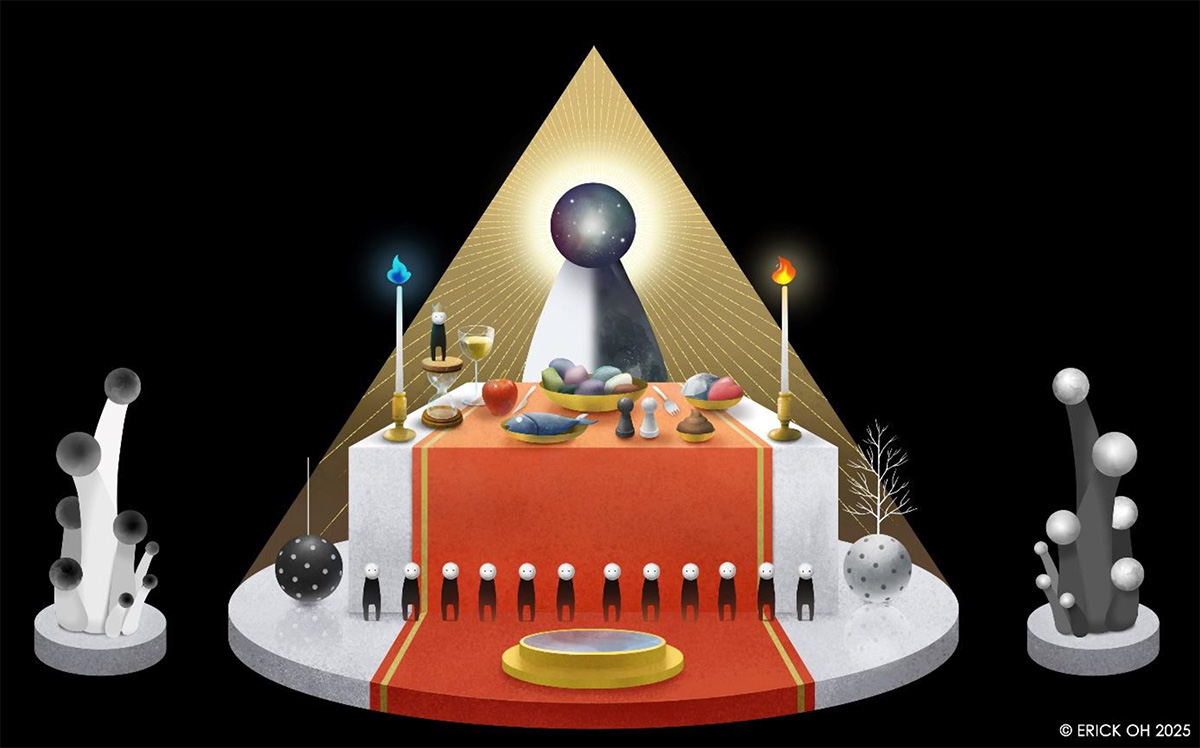
The Ars Electronica Animation Festival On Tour showcases recent artistic trends in the field of digital animation. The selection, compiled of the submissions at Prix Ars Electronica 2025 in the category New Animation Art bears witness to recent transformations within the field of animation. The festival embraces artists who push the boundaries of the medium, offering innovative and experimental visual narratives. From the 1119 submissions, around 45 projects were selected and showcased at Ars Electronica Animation Festival in September 2025.
The 2025 Ars Electronica festival title PANIC: Yes/No found strong reflections also in several of the awarded works of the Prix Ars Electronica, which share underlying sentiments of doom and unease. This thematic resonance prompted the selection for the On Tour compilation PANIC – Prix Ars Electronica Selection.
The one-hour selection begins with three works awarded by the jury of New Animation Art category at Prix Ars Electronica 2025—one Award of Distinction and two Honorary Mentions. Each tells a different story: the ritualistic unfolding of a mysterious dinner (Supper by Erick Oh); a day in the life of a motion-captured clone condemned to endless performance (The Cast of the Invisible by Lau Wai); and a requiem for a humanoid AI on the brink of being discarded as electronic waste (Aria by Yu Shien Yang and Jin Keon). The selection continues with Corpus and the Wandering by Jo Roy. From there, the works expand into broader landscapes of collapse: Auntlantis by Niceaunties imagines a world overwhelmed by plastic waste, where environmental caretakers—the “aunties”—navigate hybrid oceans filled with sea creatures and jelly malls shaped by pollution and consumerism; Light Up New York But for a Moment by Zhuyuan Liu envisions The Times Square overtaken by a mutating media-monster as architecture dissolves into spectacle; Greetings from the New World by Matthieu Mantovani hovers distantly over derelict city structures and landscapes of excess; and Core Dump by Alona Rodeh surveys, from a drone’s perspective, a monumental e-waste dump in the desert. The program culminates with Shockwave, which guides us on an infinite zoom-out through barren, AI-generated terrains in the cataclysmic aftermath of the atomic era.
Whether swarming over mountains of plastic, obsolete technologies, or industrial detritus, these works collectively confront us with the specter of environmental collapse and societal decay, forming a cohesive panorama in which the viewer instinctively yields to a mounting sense of PANIC.
Supper, Erick Oh (US), 6’
The Cast of the Invisible, Lau Wai (HK), 13’
Aria 夢姬, Yu Shien Yang & Jin Keon (TW/KR), 7’
Corpus and the Wandering, Jo Roy (CA), 7’
Auntlantis, Niceaunties (SG), 5’
Light Up New York For But A Moment, Zhuyuan Liu (CN), 8’
Greetings from the New World, Matthieu Mantovani (FR), 5'
CORE DUMP, Alona Rodeh (IL/DE), 4'
Shockwave, Mihai Grecu (RO), 5'
Ars Electronica: Animation Festival on Tour
AUSTRIAN PANORAMA
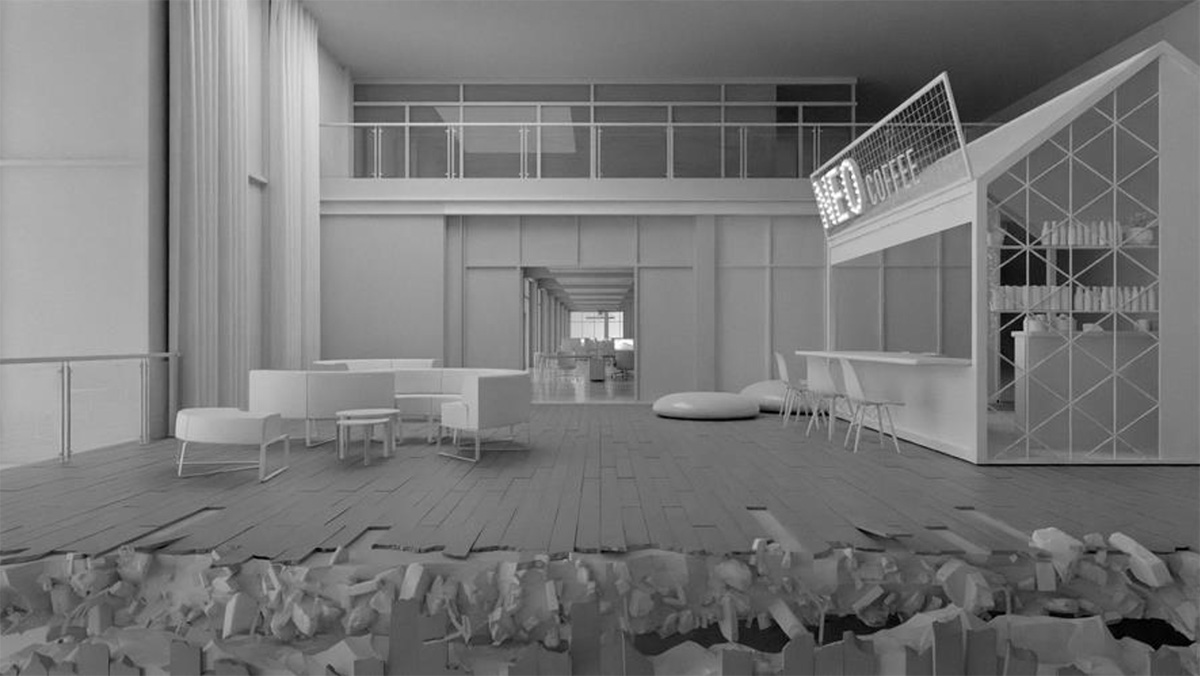
The Ars Electronica Animation Festival On Tour showcases recent artistic trends in the field of digital animation. The selection, compiled of the submissions at Prix Ars Electronica 2025 in the category New Animation Art bears witness to recent transformations within the field of animation. The festival embraces artists who push the boundaries of the medium, offering innovative and experimental visual narratives. From the 1119 submissions, around 45 projects were selected and showcased at Ars Electronica Animation Festival in September 2025.
Austrian Panorama highlights recent animation works by Austrian artists or artists who live and work in Austria. The selection starts with an experimental AI-driven animation reimagining the dark, melancholic art of Upper Austrian artist Klemens Brosch. The second work, titled Limen by Stefan Krische is a meditation on our powerlessness and despair as society faces rising xenophobia, and the uncritical spread of propaganda through media.
Seedless Fruits by Stefanie Schwarzwimmer also addresses societal issues, but in a more satirical tone. It takes us on a journey through a disintegrating corporate headquarters, critiquing neoliberal office culture and the alienation of labor in a system driven solely by profit. Last, but not least, Dagmar Schürrer’s film explores the deep interconnectivity between organic and non-organic beings, digital and analog, human and technology, nature and culture—inviting us to rethink individuality in our increasingly hybrid world.
Brosch AI – Distorted Dreams, Jolanda Abasolo, Victoria Wolfersberger, Celine Pham, Juergen Hagler (AT), 6’
Limen, Stefan Krische (AT), 3’
Seedless Fruits, Stefanie Schwarzwimmer (AT/DE), 30'
Where does the rest of the world begin?, Dagmar Schürrer (AT/DE), 11’
UPDATES & VENUE
Generate 26 will take place at Helmut List Halle in Graz. While the Workshop Day is set to happen in the AVL Lounge, GENERATE MAIN will be hosted inside the new 'Detroit' section. The venue is easy to reach by public transport using tram line 6. A car park with 180 parking spaces and 8 disabled parking bays is also available. The route from the barrier-free bays to the main entrance is continuous. Auditorium and toilets are fully accessible.
GENERATE26: A COOPERATION BY


WITH THE SUPPORT OF



Website hosted at Bü:Ro:Se am Lend
© 2026 GENspace e.V.
Imprint/Legal